
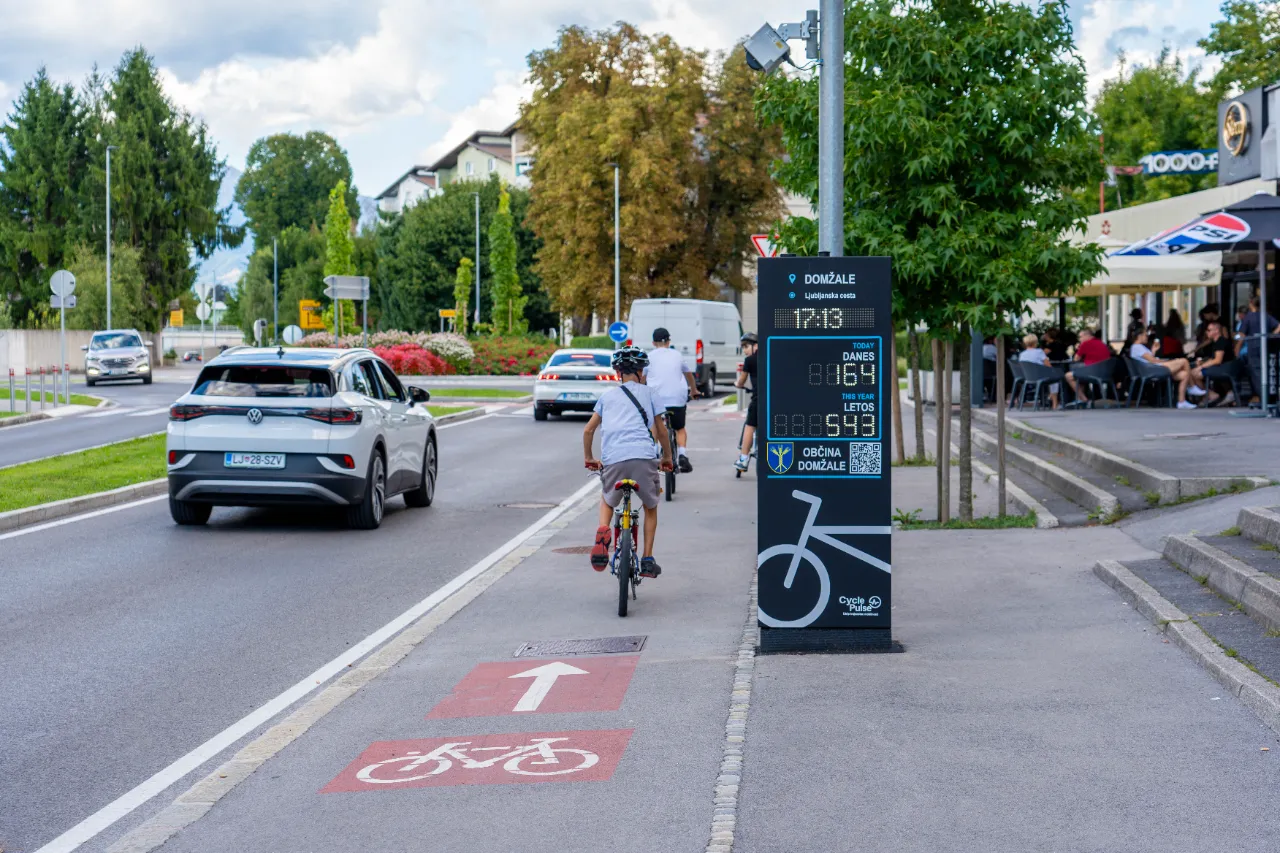

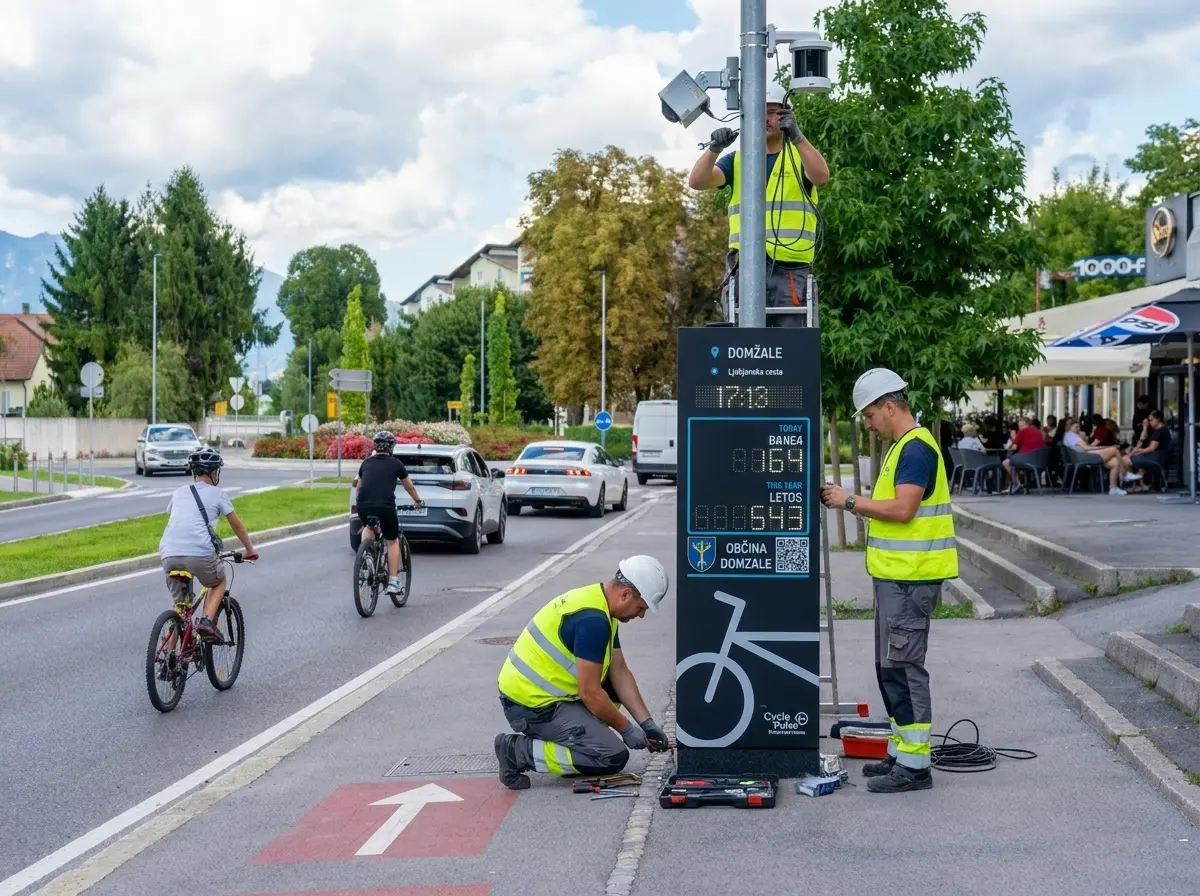
Domžale, a municipality in central Slovenia, has placed itself at the forefront of sustainable mobility by installing the Cycle Pulse multi‑modal counter from the Ljubljana‑based company Lucia tim d.o.o. Unlike traditional inductive loops, Cycle Pulse uses LiDAR technology to detect and classify cyclists, e‑scooter riders and pedestrians with over 95 % accuracy. The sensor scans across a 96° field and picks up 274 measurement points per scan; it can detect people up to 30 m away, even in bad weather. Since the sensor mounts on the side of the road and doesn’t require digging through asphalt, the installation in Domžale was completed in a single afternoon and cost far less than loop‑based counters.
Why multi‑modal data matters
Domžale’s pilot project follows the example set by the Walloon region in Belgium. In 2024, the Walloon government added 100 bicycle and pedestrian counters to the 95 units already in service to help meet its goal of raising the cycling modal share from 2 % to 5 % by 2030 . According to Frédéric Razée, adviser to the Wallonian minister of mobility, the counters are key to raising public awareness and analysing flows: counting cyclists and pedestrians allows officials to track the evolution of cycling and guide mobility policy . Domžale’s planners face similar questions: Where do people ride, and are new bike lanes actually increasing ridership? Multi‑modal data provides an objective answer.
Cycle Pulse counts every cyclist, scooter and pedestrian separately and sends the data to a cloud platform. The system’s analytics dashboard shows daily, weekly and seasonal patterns, modal split analysis and before–after comparisons, and it can export data in CSV, Excel or PDF formats. Because the platform automatically generates reports that meet Horizon Europe, CEF Transport, ERDF and LIFE funding requirements, Domžale can use its data to support EU grant applications for new bike lanes or safe crossings. The public display unit is EN 12966‑certified and shows real‑time daily and annual totals, which encourages more people to walk and cycle when they see that others are doing the same.
Early results and next steps
Even with a single unit, Domžale is already seeing patterns that were previously anecdotal. Afternoon peaks show a large share of e‑scooter users traveling between residential areas and the town centre, while weekend ridership is higher on shared paths by the river.
Because the system is fully portable and can be relocated in a few hours, the municipal team plans to move the counter to different corridors throughout the year to identify priority segments for infrastructure upgrades.
Cycle Pulse’s success in Domžale demonstrates that small municipalities don’t need a large fleet of counters to start improving active mobility. As Wallonia’s experience shows, even a modest network of counters can raise awareness, measure progress and support data‑driven investments
By embracing LiDAR‑based multi‑modal counting early, Domžale positions itself as a leader among Slovenian towns striving for safer and more sustainable transportation.
Benefits of Cycle pulse use
- Accurate multi-modal counting tracks cyclists, e-scooters, and pedestrians separately with over 95% accuracy for better planning.  
- Side-mounted installation needs no excavation, avoids road closures, and is operational within two to four hours.
- Portable hardware lets municipalities test locations, compare corridors, and refine investments before permanent infrastructure decisions.
- Public display shows daily and annual totals, making cycling visible and encouraging stronger community engagement.
Previous Story
No story to show!
Next Story